
The Brunei Cancer Centre
Early Detection and Cancer Prevention Services
Overview
Early Detection and Cancer Prevention
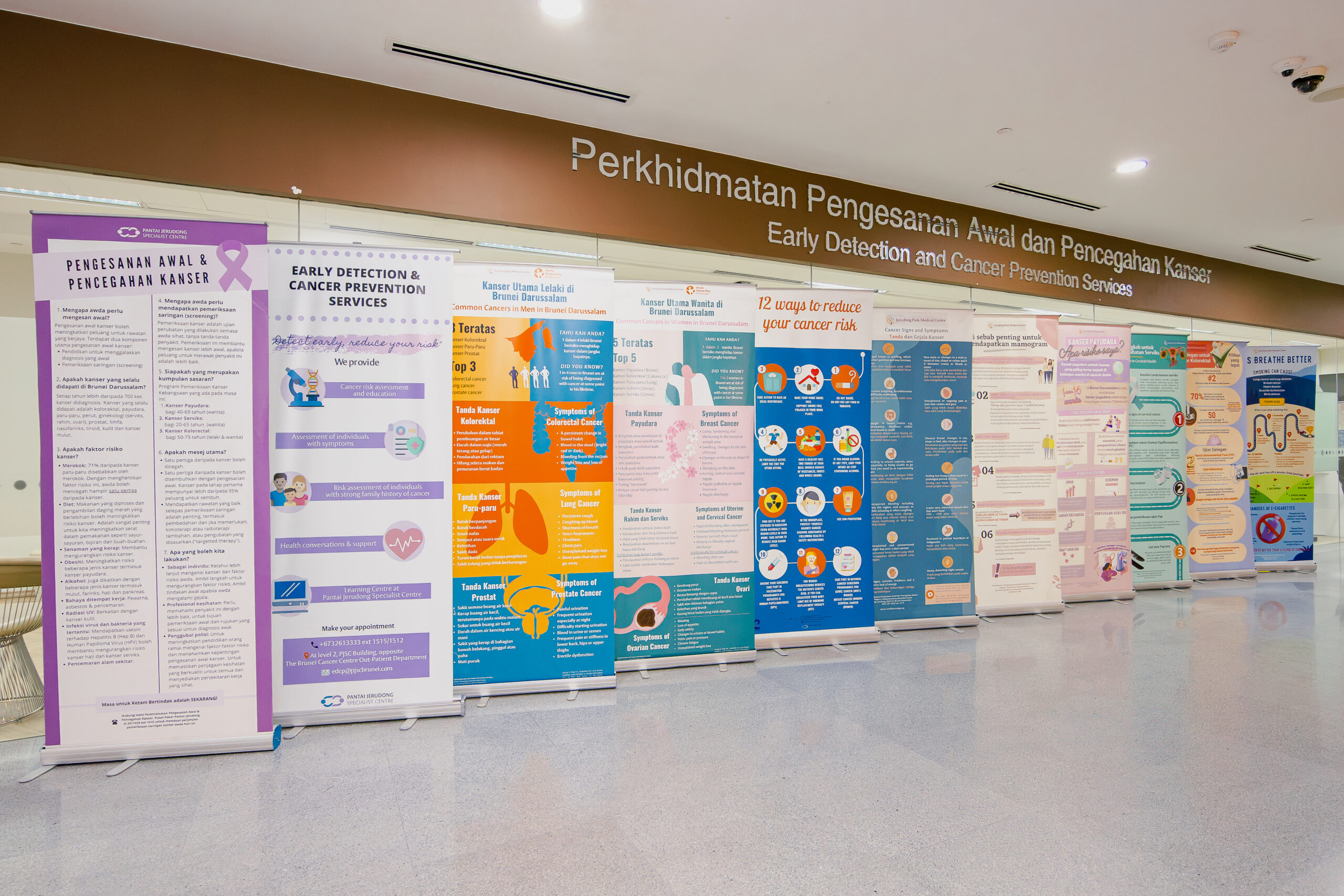
Reducing cancer incidence through screening, risk assessment and health education. Our Early Detection and Cancer Prevention Services (EDCPS) focus on identifying cancer at earlier stages and empowering high-risk individuals with knowledge to make informed health decisions. Through evidence-based screening programmes, personalised risk assessment and comprehensive education, we help you take control of your cancer health. We are dedicated to reducing the burden of cancer in Brunei Darussalam by supporting prevention, early detection and timely management.
About Early Detection and Cancer Prevention
The Early Detection and Cancer Prevention Services (EDCPS) focus on providing consultative care and cancer screening for individuals who are at higher risk, including those with a family history of cancer. We emphasise health education and cancer risk assessment to support early identification and prevention.
Our multidisciplinary team comprises dedicated doctors and consultants, nurses, hospital aides, administrative staff and receptionists, all working together to deliver coordinated and patient-centred care. We maintain close collaboration with local clinical consultants and specialists to ensure high-quality and timely screening, diagnostic investigations and well-structured referral pathways for our patients.
Our Mission
To reduce the incidence of cancer and late-stage presentation among high-risk individuals in Brunei Darussalam through early detection, screening programmes and specialised preventive care.
Prevention-Focused Care
We believe that early detection saves lives. Through accessible screening and education, we empower individuals to take charge of their health and reduce their cancer risk.
What We Offer
Cancer Risk Assessment
Comprehensive evaluation of cancer risk among high-risk individuals based on personal and family history.
Clinical Consultation
Specialised consultations with referrals to relevant specialties if necessary for further investigation or treatment.
Genetic Testing
Facilitation of genetic counselling and testing for hereditary cancer syndromes to guide clinical decision-making.
Personalised Cancer Education
Individualised education about cancer risk, prevention strategies and screening recommendations tailored to your circumstances.
Community Education
Outreach educational programmes to raise awareness about cancer prevention and screening in the community.
National Cancer Screening Programmes
We deliver comprehensive screening programmes in accordance with the Ministry of Health national guidance. Early detection through regular screening can significantly improve outcomes. These programmes are available to eligible Bruneians:
Colorectal Cancer Screening
Faecal Immunochemical Test (FIT) every 2 years and/or colonoscopy if necessary
Men and women
50-75 years
Breast Cancer Screening
Mammogram every 3 years
Women
40-69 years
Cervical Cancer Screening
Human Papillomavirus (HPV) self-sampling every 5 years
Women
25-65 years
Eligibility and Access
Individuals who have not participated in national screening programmes are encouraged to arrange appointments. Our team will assess your eligibility, explain the screening process and answer any questions. We provide a supportive environment where you can discuss your concerns and make informed decisions about screening.
Who Benefits From Our Services
Our services are designed for individuals at higher risk of cancer. You may benefit from EDCPS if you:
- Are referred by clinicians for cancer education, risk assessment or screening
- Have a family history of cancer that may be inherited (such as breast, colorectal or ovarian cancer)
- Are eligible for national screening programmes but have not yet undergone screening
- Are asymptomatic but seeking education and awareness on cancer prevention and early detection
Empowerment Through Knowledge
We believe that health education plays a major role in influencing screening behaviours, particularly in accessing cancer screening. Knowledge empowers individuals to make informed decisions about their health and take preventive action.
We regularly conduct health education talks delivered by our doctors, nurses and allied health staff from EDCPS and The Brunei Cancer Centre, as well as invited external speakers.
These educational sessions cover:
Cancer Risk Factors
Understanding personal and familial risk factors that influence your cancer risk profile.
Improved Survival Rates
Early-stage cancers detected through screening have significantly higher survival rates compared to advanced cancers.
Reduced Treatment Burden
Early detection often allows for less aggressive treatment options, reducing side effects and improving quality of life.
Impact and Benefits
Early detection and prevention-focused care save lives. Through our services, we help individuals understand their cancer risk, access appropriate screening and receive timely interventions that can significantly improve outcomes.
Early Stage Detection
Screening programmes identify cancers at earlier stages when treatment is more effective and outcomes are better.
Improved Survival Rates
Early-stage cancers detected through screening have significantly higher survival rates compared to advanced cancers.
Reduced Treatment Burden
Early detection often allows for less aggressive treatment options, reducing side effects and improving quality of life.
Empowered Patients
Health education enables individuals to make informed decisions and take active roles in their cancer prevention.
Family Health Impact
Identification of hereditary cancer syndromes allows at-risk family members to pursue preventive strategies.
Public Health Benefit
Community education programmes increase screening awareness and uptake, reducing overall cancer burden in Brunei.
Frequently Asked Questions
Who should undergo cancer screening?
National screening programmes are recommended for asymptomatic individuals within specific age ranges: colorectal screening for ages 50-75, breast screening for ages 40-69 and cervical screening for ages 25-65. Additionally, individuals with a family history of cancer or those identified as higher risk may benefit from screening regardless of age. Speak with our team to determine if screening is appropriate for you.
What does a family history of cancer mean for my risk?
A family history of certain cancers (such as breast, ovarian or colorectal cancer) can indicate increased personal risk, particularly if multiple family members were diagnosed or diagnosed at younger ages. Some cancers are associated with hereditary genetic mutations. We assess your individual risk based on your family history and recommend appropriate screening or testing if needed.
What is a genetic testing and how does it work?
Genetic testing identifies inherited mutations that increase cancer risk. If you meet criteria for testing based on personal or family history, we will arrange genetic counselling to help you understand what testing means and what the results could mean for you and your family. A blood sample is analysed to detect specific genetic mutations associated with hereditary cancer syndromes.
Is screening uncomfortable or painful?
Screening procedures vary. Faecal immunochemical testing (FIT) is non-invasive and requires only a small stool sample. Mammography involves temporary compression of the breast. HPV self-sampling allows you to collect your own sample. Colonoscopy is performed under sedation to ensure comfort. Our team will explain what to expect and address any concerns you have about specific procedures.
What happens if screening results are abnormal?
If screening results are abnormal, our team will discuss the findings with you and recommend next steps, which may include additional testing, specialist referral or surveillance. Not all abnormal results mean cancer. We provide clear communication and support to help you understand your results and make informed decisions about further evaluation.
Can I reduce my cancer risk through lifestyle changes?
Yes. Lifestyle modifications can significantly reduce cancer risk. These include maintaining a healthy weight, eating a balanced diet rich in fruits and vegetables, regular physical activity, limiting alcohol consumption, not smoking and managing stress. Our team provides personalised guidance on lifestyle changes that may reduce your individual cancer risk.
Should my family members also be screened?
If you have a family history of cancer or if genetic testing identifies a hereditary cancer syndrome, at-risk family members should consider screening or genetic counselling. We can provide guidance on which relatives might benefit and can facilitate referrals for their assessment. Early identification of risk in family members can enable preventive strategies and early detection.
How often should I be screened?
Screening intervals depend on the cancer type and your individual risk. Standard national programmes recommend: colorectal screening every 2 years (FIT) or as directed after colonoscopy, breast screening every 3 years, and cervical screening every 5 years. If you are higher risk or have abnormal results, more frequent screening may be recommended. Our team will discuss the appropriate screening schedule for you.
The Brunei Cancer Centre
Speak to Us Today
Whether you are seeking a second opinion, scheduling a screening or making a referral, our team is ready to help you take the next step.
-
Address
The Brunei Cancer Centre, Pantai Jerudong Specialist Centre Building, Jerudong Park Medical Centre, Jerudong Park BG 3122, Brunei Muara, Brunei Darussalam -
Phone
+673 261 3333 -
Working Hours
Monday - Thursday: 8.00am - 5.00pm
Friday: 8.00am - 5.00pm
Closed for Friday Prayer: 12.00noon - 2.00pm