
The Brunei Cancer Centre
Medical Oncology
Overview
Comprehensive Medical Oncology Care
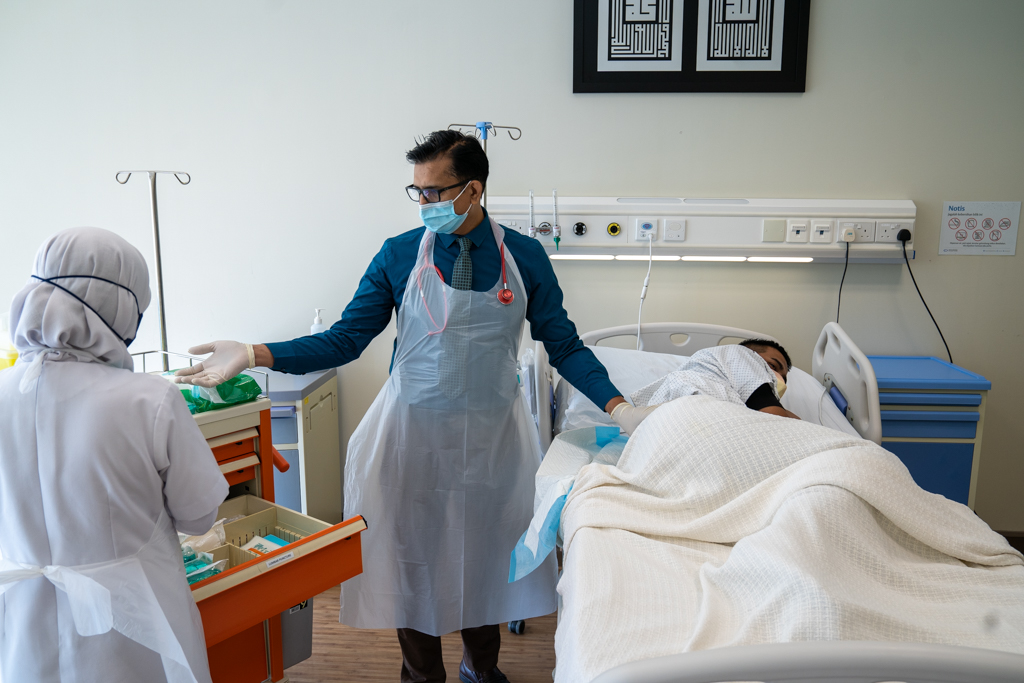
Delivering evidence-based cancer treatment through chemotherapy, targeted therapy, immunotherapy and personalised medicine. Our multidisciplinary medical oncology team combines clinical expertise with the latest therapeutic advances to tailor treatment plans to each patient’s unique circumstances. From diagnosis through survivorship, we are committed to providing compassionate, holistic care that extends beyond treatment to symptom management, emotional support and long-term wellbeing.
About Medical Oncology
The Medical Oncology Department is dedicated to delivering comprehensive, high-quality cancer care through a multidisciplinary and patient-centred approach. The team comprises experienced medical oncology consultants, senior and junior medical officers and specialty nurses who provide coordinated services across outpatient clinics, day care units and inpatient facilities.
We are committed to excellence in cancer diagnosis, treatment, surveillance, research and education. By adopting a multidisciplinary team (MDT) approach, we endeavour to ensure that each patient benefits from a holistic approach that takes into account their individual circumstances and needs.
Our Commitment
Our department actively engages in research collaborations with both national and international institutions, enabling access to advanced therapies and contributing to the ongoing advancement of oncology care. We believe that every patient deserves individualised treatment planning, comprehensive symptom management and support throughout their cancer journey.
Multidisciplinary Approach
Through regular tumour board discussions, our team collaborates with surgeons, radiation oncologists, pathologists and supportive care specialists to ensure every patient receives integrated, evidence-based care.
Services & Treatments
Chemotherapy
Chemotherapy remains a cornerstone of cancer treatment, used at different stages of disease: in the neoadjuvant setting to shrink tumours before surgery, in the adjuvant setting to eliminate residual disease after surgery, and in the palliative setting to manage advanced cancer.
Our department offers a full range of chemotherapy regimens delivered through outpatient clinics and our dedicated day care unit, where patients receive treatment in a comfortable, supportive environment. Our oncology nurses provide careful monitoring of side effects, supportive care and counselling throughout the treatment course. We utilise the latest antiemetic agents, growth factors and supportive medications to optimise tolerability and quality of life.
Delivery Setting
Outpatient clinics and day care unit
Monitoring
Regular blood work, toxicity assessment
Support
Antiemetics, growth factors, counselling
Delivery Setting
Outpatient clinics and day care unit
Chemotherapy
Chemotherapy remains a cornerstone of cancer treatment, used at different stages of disease: in the neoadjuvant setting to shrink tumours before surgery, in the adjuvant setting to eliminate residual disease after surgery, and in the palliative setting to manage advanced cancer.
Our department offers a full range of chemotherapy regimens delivered through outpatient clinics and our dedicated day care unit, where patients receive treatment in a comfortable, supportive environment. Our oncology nurses provide careful monitoring of side effects, supportive care and counselling throughout the treatment course. We utilise the latest antiemetic agents, growth factors and supportive medications to optimise tolerability and quality of life.
Delivery Setting
Outpatient clinics and day care unit
Monitoring
Regular blood work, toxicity assessment
Support
Antiemetics, growth factors, counselling
Targeted Therapy
Precision oncology has transformed cancer treatment by allowing us to target the specific molecular drivers of individual cancers. Targeted therapies are directed against particular mutations or pathways that fuel cancer growth, offering improved efficacy and often lower toxicity compared to conventional chemotherapy.
Our department has expertise in administering both oral targeted agents (tyrosine kinase inhibitors, BRAF inhibitors and others) and intravenous biologic therapies including monoclonal antibodies (trastuzumab, bevacizumab, cetuximab and others). We provide patient education on managing side effects, monitoring for toxicity and optimising adherence to oral targeted agents.
Oral Agents
Tyrosine kinase inhibitors, BRAF inhibitors
Biologics
Monoclonal antibodies, growth factor inhibitors
Testing
Molecular testing guides therapy selection
Immunotherapy
Immunotherapy has revolutionised cancer care by harnessing the body’s own immune system to recognise and destroy cancer cells. Checkpoint inhibitors that block PD-1, PD-L1 and CTLA-4 have demonstrated durable responses across multiple cancer types.
Our department provides checkpoint inhibitor therapy with careful patient selection based on tumour characteristics, baseline health status and organ function. We manage immune-related adverse events through close clinical monitoring, laboratory assessment and multidisciplinary collaboration with other specialties as needed. Patients receive detailed counselling on expected benefits, potential side effects and monitoring plans.
Checkpoint Inhibitors
Anti-PD-1, anti-PD-L1, anti-CTLA-4
Patient Selection
Biomarker-driven therapy decisions
Safety Management
Immune event monitoring and management
Genomic Testing
Next Generation Sequencing and Molecular Profiling
Understanding the molecular landscape of a patient’s cancer is essential to modern oncology. Next Generation Sequencing (NGS) identifies specific mutations, gene amplifications and other alterations that may be targetable with precision therapies.
Our department works with accredited molecular pathology partners to obtain comprehensive genomic profiles of cancers. We interpret these results within the clinical context and use them to guide treatment selection, predict drug sensitivity and inform prognosis. This molecular profiling approach has become standard practice for many tumour types, enabling us to move beyond one-size-fits-all treatment toward truly personalised oncology.
Scope
Comprehensive tumour genomic profiling
Application
Treatment selection and prognostication
Partners
Accredited molecular pathology labs
Hereditary Cancer Assessment
Hereditary Cancer Assessment and Germline Testing
A proportion of cancers are driven by inherited genetic mutations in genes like BRCA1, BRCA2 and others. Identifying patients and families with hereditary cancer syndromes has important implications for treatment selection, surveillance strategies and family risk management.
Our department evaluates patients for hereditary cancer risk based on personal and family history. When indicated, we arrange genetic counselling and germline testing. Results inform treatment decisions (for example, PARP inhibitors in BRCA-mutated cancers), guide surveillance for second primary cancers and enable at-risk relatives to pursue preventive strategies.
Assessment
Personal and family history evaluation
Counselling
Genetic counselling before and after testing
Management
Targeted therapy, surveillance, family involvement
Palliative Care
Palliative and Supportive Care
Palliative care is not limited to end-of-life care; it is an integral part of comprehensive cancer management at every stage of disease. Our department is committed to addressing symptoms, managing side effects and supporting the emotional and psychosocial wellbeing of patients and their families.
We manage pain, nausea, fatigue, loss of appetite and other cancer-related symptoms through a combination of medications, lifestyle modifications and supportive strategies. Our team includes oncology nurses, social workers and counsellors who provide emotional support, help with practical arrangements and facilitate discussions around goals of care. We work closely with our dedicated Palliative Care Unit when needed for complex symptom management, end-of-life discussions or comprehensive comfort-focused care.
Symptom Management
Pain, nausea, fatigue, loss of appetite
Psychosocial Support
Counselling, family support, practical assistance
Goals of Care
Shared decision-making, advance planning
Comprehensive Palliative Care Support
Our dedicated Palliative Care Unit provides specialised support for patients and families throughout the cancer journey. Whether you need symptom management, emotional support, advance care planning or end-of-life care, our compassionate team is here to help.
Your Treatment Journey
Initial Consultation
Meet with a medical oncologist to review your diagnosis, pathology reports and imaging. Discuss your symptoms, medical history and treatment options tailored to your cancer type and stage.
Multidisciplinary Planning
Your case is reviewed at multidisciplinary team meetings with surgeons, radiation oncologists and pathologists to ensure a comprehensive, integrated treatment approach.
Treatment Commencement
Begin your treatment plan, whether chemotherapy, targeted therapy, immunotherapy or palliative care. Receive detailed education on your specific treatment, expected benefits and potential side effects.
Active Treatment and Monitoring
Attend regular appointments for treatment delivery, blood work and clinical assessment. Our team monitors your response and manages side effects to optimise both efficacy and quality of life.
Follow-up and Survivorship
After completing treatment, enter surveillance phase with regular clinical visits, imaging and blood tests. Manage treatment-related side effects and work toward long-term health and wellbeing.
Treatment Settings
Our medical oncology services are delivered across multiple settings to ensure flexibility and comfort:
- Outpatient Clinic
- Consultations, treatment planning and monitoring in our clinic setting.
- Day Care Unit
- Comfortable, supportive environment for chemotherapy and intravenous biologic therapy.
- Inpatient Facility
- Hospitalisation available for complex cases or management of complications.
- Teleconsultation
- Remote consultations available for follow-up and monitoring when appropriate.
Managing Side Effects
Different cancer treatments cause different side effects. Our team is experienced in preventing and managing treatment-related toxicities to help you maintain quality of life:
- Nausea and Loss of Appetite
- Preventive medications, dietary guidance and nutritional support.
- Fatigue
- Activity recommendations, nutritional assessment and symptom management.
- Hair Loss and Skin Changes
- Scalp cooling options, skin care advice and emotional support.
- Bone Marrow Effects
- Growth factor support, infection precautions and careful monitoring.
Treatment Outcomes and Success
Treatment outcomes in oncology depend on many factors including cancer type, stage at diagnosis, molecular characteristics, patient health and treatment response. Our commitment to evidence-based medicine and individualised care drives improved outcomes and quality of life for our patients.
Improved Cure Rates
Modern chemotherapy regimens, targeted therapy and immunotherapy have significantly improved cure rates for many cancer types, particularly when diagnosed at earlier stages.
Extended Survival
Even for advanced cancers, improved treatments have extended median survival and improved quality of life, offering patients more time with loved ones.
Better Tolerability
Advances in supportive care, antiemetic agents and treatment selection have reduced side effects and allowed patients to maintain quality of life during treatment.
Precision Medicine Success
Targeted and immunotherapies guided by molecular profiling achieve higher response rates and more durable remissions in appropriate patient populations.
Symptom Control
Through integrated palliative and supportive care, we achieve excellent control of cancer-related symptoms and improve patient comfort.
Long-term Survivorship
Growing numbers of cancer survivors benefit from improved follow-up strategies, lifestyle counselling and surveillance for recurrence and long-term health.
Key Achievements and Highlights
Personalised Precision Oncology
We integrate molecular profiling, genomic testing and biomarker-driven therapy selection to tailor treatment to each patient’s individual cancer.
Multidisciplinary Collaboration
Regular tumour board discussions ensure comprehensive treatment planning with seamless integration across surgical, radiation and supportive care specialties.
Research and Innovation
Active engagement in national and international research collaborations provides access to clinical trials and advanced therapies at the forefront of oncology.
Expert Multidisciplinary Team
Our experienced consultants, nurses and support staff work together to deliver coordinated, compassionate care throughout your cancer journey.
Holistic Patient Care
We address not just disease treatment but also symptom management, emotional support and long-term quality of life for patients and families.
Patient Education and Empowerment
We provide detailed, understandable information about diagnoses, treatments and side effects, empowering patients to participate in their own care.
Frequently Asked Questions
How long does chemotherapy treatment take?
The duration of chemotherapy depends on the cancer type, stage and specific regimen recommended for you. Some treatments last 3 months, others 6 to 12 months. Your oncologist will discuss the expected timeline during your initial consultation. Each treatment cycle typically involves a period of chemotherapy followed by a recovery period.
Will I lose my hair during chemotherapy?
Hair loss depends on the specific chemotherapy drugs used. Some drugs cause hair loss, whilst others do not. If hair loss is expected with your treatment, it is usually temporary and hair regrows after treatment ends. Scalp cooling systems are available to reduce hair loss during treatment. Our team will discuss what to expect and provide resources to help you cope.
Can I continue working during chemotherapy?
Many patients continue working during chemotherapy, though some may need to reduce hours or take time off around treatment days. This depends on the specific regimen, your job demands and how you tolerate treatment. We recommend discussing your work situation with your oncologist so adjustments can be made if needed.
What is the difference between targeted therapy and chemotherapy?
Chemotherapy works by damaging all rapidly dividing cells, whilst targeted therapy is designed to attack specific molecules or pathways that drive the growth of your particular cancer. Targeted therapies often have fewer side effects because they are more selective. Which treatment is best for you depends on your cancer’s molecular characteristics, which our team determines through testing.
What is immunotherapy and how does it work?
Immunotherapy works by “releasing the brakes” on your immune system, allowing it to recognise and destroy cancer cells. Checkpoint inhibitor drugs block molecules that cancer uses to hide from immune cells. This allows your body’s own immune system to attack the cancer more effectively. It is a different approach from traditional chemotherapy and works particularly well for certain cancer types.
What happens if the cancer doesn't respond to treatment?
If your cancer does not respond to the initial treatment or if it returns after treatment, we explore alternative options. This may include different chemotherapy regimens, targeted therapies if molecular testing identifies them, clinical trials, or palliative care focused on symptom management and quality of life. We always discuss options openly and involve you in decisions.
How often will I need to visit the hospital during treatment?
This depends on your specific treatment plan. Some patients come weekly for treatment and blood work, others every two to three weeks. Your oncology team will provide you with a detailed schedule and calendar of appointments. We work to make appointments convenient and coordinate care to minimise the burden on you and your family.
What support is available if I'm struggling emotionally during treatment?
Emotional support is an integral part of cancer care. Our team includes nurses, social workers and counsellors who can provide psychological support, help with practical matters and connect you with support groups and resources. We also work with family medicine and palliative care specialists. Never hesitate to speak up about your emotional or practical needs.
The Brunei Cancer Centre
Speak to Us Today
Whether you are seeking a second opinion, scheduling a screening or making a referral, our team is ready to help you take the next step.
-
Address
The Brunei Cancer Centre, Pantai Jerudong Specialist Centre Building, Jerudong Park Medical Centre, Jerudong Park BG 3122, Brunei Muara, Brunei Darussalam -
Phone
+673 261 3333 -
Working Hours
Monday - Thursday: 8.00am - 5.00pm
Friday: 8.00am - 5.00pm
Closed for Friday Prayer: 12.00noon - 2.00pm